Buying a home with a limited budget can feel like you’re staring at a mountain,…
USDA Loans: How Zero Down Financing Supports Homebuyers in Rural Wisconsin
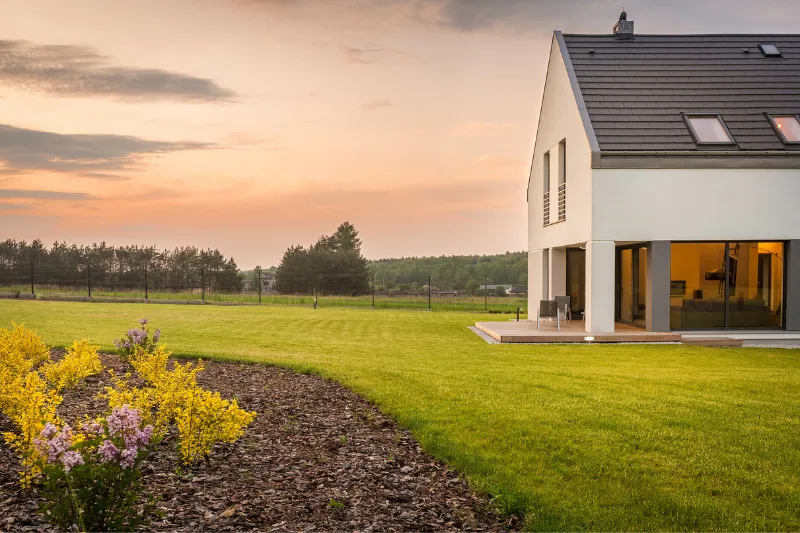
Buying a home in a rural area can feel like a maze of questions—especially around down payments and qualifying income. **A USDA loan is a government-backed mortgage program that offers eligible homebuyers the chance to purchase in select rural areas with zero down payment.** In this guide, we’ll focus on what USDA loans are, who qualifies, and how rural buyers in Central Wisconsin can take advantage of this unique opportunity.
Key Takeaways
- Purpose: USDA loans help qualified buyers finance homes in eligible rural and suburban communities with no down payment.
- Requirements: Income and property location limits, primary residence occupancy, and manageable monthly debts are typical.
- Timeline: The USDA approval process can take a few extra days beyond standard financing; plan for some added time upfront.
- Best For: Buyers considering rural or certain suburban properties who want zero down payment and competitive rates.
Quick Answers
- Do I have to put any money down with a USDA loan? No, USDA loans are one of the only programs that allow eligible buyers to put zero down.
- Is my property eligible? Properties must be located in a USDA-eligible area; many towns in Central and Northern Wisconsin qualify.
- What if I’ve owned a home before? USDA loans are not limited to first-time buyers, but you can’t own another suitable home at closing.
- Are there income limits? Yes, your household income must fall below local USDA income caps, which vary by county and family size.
- Can I use a USDA loan for new construction? Sometimes, but guidelines are specialized. Most use USDA for existing homes.
What is a USDA Loan?
At Mammoth Mortgage (NMLS# 2560979), we strive to be your trusted advisor, not just another lender pitching loan types. **A USDA loan is a fixed-rate mortgage backed by the U.S. Department of Agriculture, designed to encourage homeownership in rural and certain suburban communities.** The big draw? No down payment required, flexible credit and income guidelines, and competitive rates that stack up against—or often outperform—other low down payment programs.
Who Qualifies for a USDA Loan in Wisconsin?
USDA loans are designed to support buyers purchasing in designated rural areas, which means eligibility hinges on both the property location and your household income. Here’s how it typically breaks down:
- Property Eligibility: The home must be in a USDA-eligible area. In Wisconsin, you might be surprised—towns like Weston, Merrill, and plenty of “just outside the city” addresses in Central Wisconsin often qualify.
- Income Limits: Your total household income (including most adults living in the home) must fall below set caps, which vary by county and number of people in your household. These are updated by the USDA each year.
- Occupancy: The home must be your primary residence. Vacation homes and investment properties aren’t eligible under this program.
- Credit/DTI: There’s no cut-and-dry score requirement, but a score in the mid-600s or higher improves your chances. Your total monthly debts—including the new mortgage—should be reasonable relative to your income.
Pro Tip: Use Strategy Over Guesswork
With USDA loans, guidelines can be nuanced. Maybe your household income is right around the cap, or you’ve got a unique family situation. This is where we talk strategy, not scripts. We’ll map out what you’re thinking and feeling around timeline, down payment, and monthly payments so you can move from uncertainty to what we call speed to certainty.
USDA Loan Features & Benefits
- No Down Payment: Qualified buyers can finance up to 100% of the home’s value. That’s a rare find in today’s mortgage world.
- Low Mortgage Insurance: Instead of standard private mortgage insurance (PMI), USDA comes with a modest guarantee fee—typically lower than FHA or some low-down-payment conventionals.
- Competitive Interest Rates: Because the loans are government-backed, rates are often on par with, or even below, similar low down payment programs.
- Flexible Guidelines: Income from household members (even those not on the loan) can in some cases be counted for qualification; every scenario is unique.
- Closing Costs Assistance: You can ask sellers to pay some or all of your closing costs—or wrap some costs into the loan if the appraised value allows.
USDA Loan Process—What to Expect
You won’t find us glossing over the timeline just to make you feel good. Here’s how a typical USDA loan flows:
- Consult & Application: We start with a detailed conversation—mapping your priorities and running your initial eligibility to save everyone time (yours especially).
- Pre-Approval & Home Shopping: Once pre-approved, you hit the ground running with a full understanding of your buying power and monthly payment estimate.
- Offer, Contract, and Appraisal: Found the perfect place? Time for a signed offer, home inspection, and appraisal—just like any other mortgage.
- USDA Submission: After lender underwriting, your file gets a stamp of approval from the USDA itself. This adds a few days to your timeline—think of it as one more layer of protection, not a bureaucratic black hole.
- Final Sign-Off and Closing: Once USDA gives the green light, we coordinate closing. You get the keys, and the real adventure begins.
USDA vs. Conventional vs. FHA: How Do They Compare?
| Feature | USDA | FHA | Conventional |
|---|---|---|---|
| Down Payment | 0% (eligible buyers) | 3.5% minimum | 3% minimum |
| Primary Use | Rural/suburban homes | Any area | Any area |
| Income Limits | Yes | No | No |
| Mortgage Insurance | USDA guarantee fee (lower than FHA PMI) | Upfront and monthly MIP | PMI for <20% down |
| Credit Standards | Flexible/generally mid-600s+ | Flexible/low 600s+ | Typically 620+ |
Common Misconceptions About USDA Loans
- “It’s only for farms.” No cattle or chicken coop required. It’s for purchasing or refinancing a home in an eligible rural/suburban area—no acreage or farm business required.
- “They take forever to close.” USDA does add a step, but with proactive planning and a data-driven approach, most loans close in a similar timeline to other loans.
- “My income’s too high.” Income limits vary by county and household size—don’t self-disqualify until you’ve talked with someone who actually checks the guidelines (hint: that’s us).
Spotlight: USDA Loan Eligibility in Central & Northern Wisconsin
Central Wisconsin is full of surprise USDA-eligible pockets. Whether you’re looking in Wausau, Weston, Schofield, Tomahawk, Plover, or outlying areas near Green Bay and the Fox Valley, there’s a good chance your dream home is in the zone—and so are you. Eligibility maps and income calculators are our bread and butter; it’s how we turn “maybe” into “let’s go.”
When is a USDA Loan NOT the Right Fit?
Let’s keep it real. USDA isn’t for everyone. If you’re set on buying within dense urban areas, or your income exceeds the published limits, conventional or FHA options may be a better fit. VA loans are also a strong option for eligible veterans. We’ll map out a Total Cost Analysis side-by-side so you can see which strategy wins for your scenario.
Let’s Open Doors—Together
We started Mammoth Mortgage because we believe home financing should be a high-touch, strategy-based experience—one where technology enhances, rather than replaces, the human side of things. Every buyer’s story is unique, and in Central Wisconsin, USDA loans make homeownership possible for many who assumed it was out of reach. Ready to discuss your options, compare programs, and get pre-approved—before that perfect place is snapped up by someone else? Call, text, or email us. We’ll break it down together, so you know exactly what your next steps look like.
Frequently Asked Questions
Are USDA loans only for first-time buyers?
No, USDA loans are available to both first-time and repeat buyers, as long as you don’t already own a suitable primary residence at closing.
What’s considered a “rural area” for USDA eligibility?
USDA defines eligible areas based on population density, not just geography. Many small towns or suburbs in Central and Northern Wisconsin qualify—check the interactive USDA map for specifics.
Is mortgage insurance required on USDA loans?
Yes, but it comes in the form of a modest guarantee fee—usually less expensive than FHA or conventional PMI. The guarantee fee helps the program remain available for qualified buyers.
Can I use a USDA loan to purchase a fixer-upper?
Generally, USDA loans are intended for move-in-ready homes, but there are limited repair escrow options. Extensive renovations may require a different program.
How long does USDA loan approval take?
The USDA loan process generally adds a few extra days on top of standard underwriting since the file goes to USDA for final approval. With good communication and a proactive approach, most USDA loans close within similar timelines to other mortgage types.
This is educational and not financial advice. Loan programs and guidelines can change. Talk with a licensed mortgage professional about your specific scenario.

About the Author
Adam Karcz
Owner at Mammoth Mortgage · NMLS #917109
Leads the company with a focus on people—staying connected to clients, showing up for our referral partners, and making sure the team is confident and delivers. I’m big on education, because when you understand your options, you make empowered decisions—and that’s where the magic happens.
Specializes in: Conventional, VA, FHA
Licensed in: WI
Related Posts